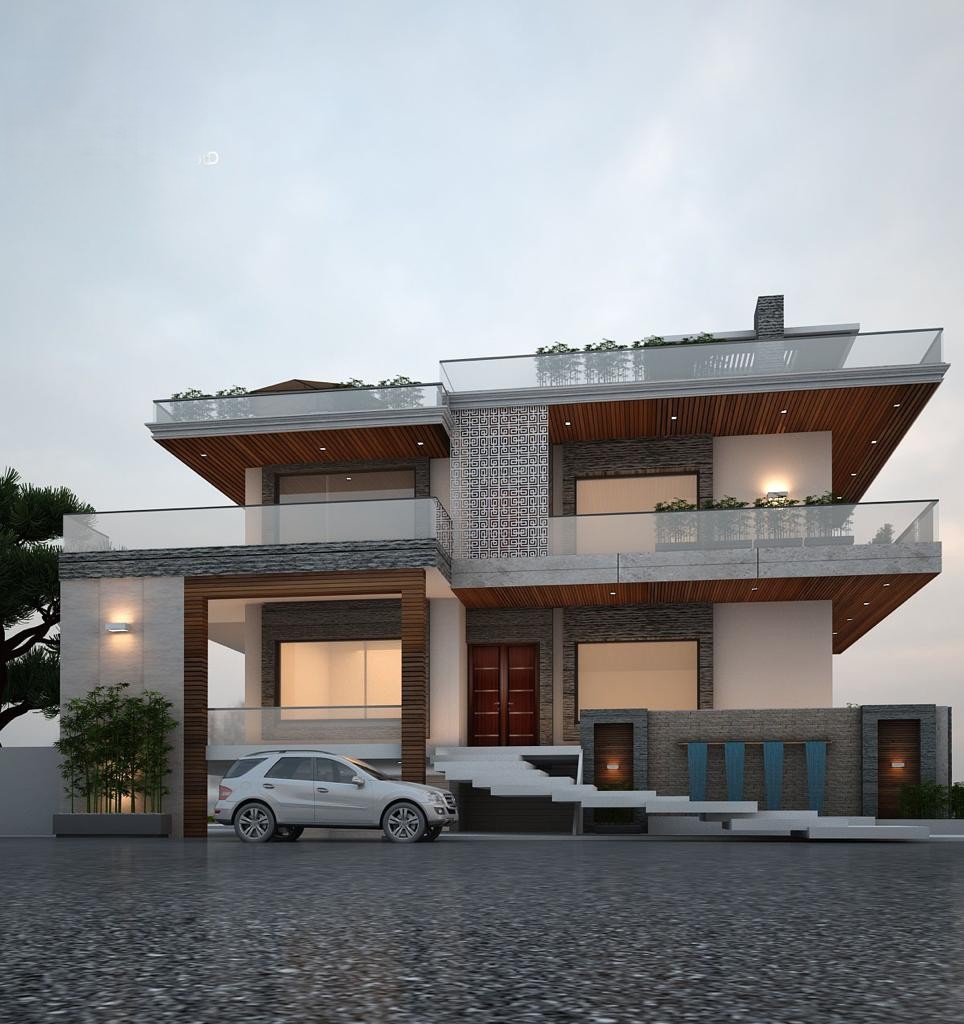
The Himalayan foothills ask architecture to do more than look composed. A home here must negotiate intense summer sun, heavy monsoon rain, cool winter nights, sloping land and views that deserve to remain part of everyday life. Good design begins by treating these conditions as the brief rather than as problems added later.
In Dehradun and its surrounding landscape, the most comfortable homes are often the ones that respond quietly. Their orientation, openings, shaded edges and material choices work together before mechanical systems are asked to compensate.
Begin With Climate, Not a Facade
A facade is the visible result of many decisions, not the starting point. Before drawing elevations, we study the sun path, prevailing breeze, access, neighbouring structures and the natural fall of the site. This establishes where a building should open, where it should remain protected and how its rooms can receive useful daylight without glare.
Orient Rooms Around Daily Life
Morning light suits bedrooms, breakfast areas and quieter corners. Living spaces can be arranged toward longer views while receiving controlled daylight through verandas, recessed glazing or deep balconies. Service areas can help buffer harsher western exposure.
Create Shade as Usable Space
Shade should not be treated only as a technical projection on a drawing. In a home, a shaded edge can become a sit-out, a transition court, a planted terrace or a place where doors can remain open during rain. These in-between spaces make the building more adaptable across seasons.
Climate-responsive architecture is not an added feature. It is the order in which design decisions are made.
Work With the Terrain
For sloping sites, forcing a single flat platform can create unnecessary excavation, retaining work and disruption. A stepped plan can follow the land more naturally, allowing different levels to connect with gardens, terraces and views.
This approach also creates opportunities for sectional richness: double-height spaces, half-level connections, courtyards and roof terraces that feel grounded rather than imposed.
Plan Water Before the Monsoon
Drainage routes, roof slopes, sill details and landscape grading must be resolved early. Water should be directed clearly away from foundations and retaining walls, with accessible points for maintenance. Elegant architecture still depends on disciplined technical detailing.
Choose Materials That Age With Dignity
Stone, brick, timber, plaster, concrete and metal each have a place, but their selection should consider local workmanship, exposure and maintenance. A material palette becomes stronger when it is limited and repeated with purpose.
- Use locally familiar materials where craft and repair knowledge already exist.
- Protect timber and metal through detailing rather than relying only on coatings.
- Allow natural materials to weather honestly instead of expecting permanent visual perfection.
- Coordinate joints, drips and junctions before construction begins.
Design for Change
A thoughtful home should support the family it serves today while allowing life to evolve. A study may become a bedroom, a terrace may later need greater enclosure, and circulation should remain comfortable for different ages. Flexible planning is not vague planning; it is clarity about what may change and what should remain fixed.
A Home Should Belong to Its Place
The goal is not to imitate a regional style. It is to understand the deeper intelligence of local buildings: shade, courtyards, thick edges, protected openings and materials suited to weather. Contemporary architecture can carry those lessons forward without becoming nostalgic.
When site, climate, structure and daily rituals are considered together, a home in the foothills begins to feel inevitable. It becomes quieter, more comfortable and more connected to the landscape around it.